

Sanctioned? Confidently Wrong!
⚠️ A cautionary tale from our own experience with sanctions data
A customer recently sent us an AI-generated summary from a leading search engine that stopped us in our tracks:
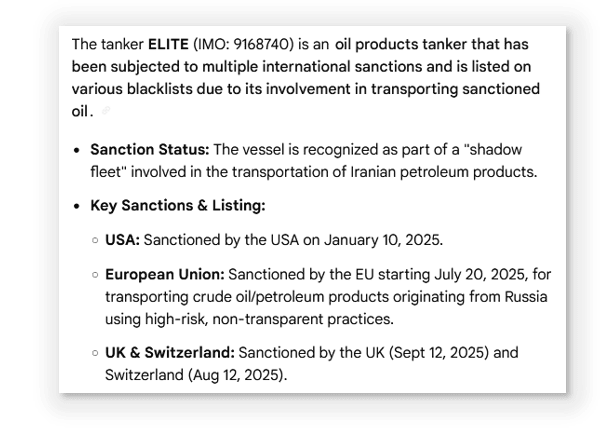
It stated, confidently, that a tanker was sanctioned. It cited sources. It looked credible and official. At first glance, there was every reason to take it seriously.
But when we checked the vessel against our own sanctions data, we found nothing. No sanctions. No match. No indication that this ship should have been flagged.
So we dug deeper.
We opened the sources the AI had cited. They didn’t mention the vessel at all. Then we checked the sanctions text shown in the summary and discovered that it actually referred to a completely different IMO number. The tanker was not sanctioned.
We see plenty of imperfect data in shipping, but this one stayed with us because of how convincing it looked. There was no obvious warning that the answer had been fabricated. It was polished, sourced and completely wrong.
And in sanctions compliance, that matters. A false positive can delay a fixture, trigger unnecessary escalation or cause a company to walk away from perfectly legitimate business. A false negative can be far worse.
For us, this was another very real reminder that sanctions screening cannot simply be Googled. AI-generated summaries can be useful for many things, but sanctions intelligence needs structured data, verified identities and traceability back to primary sources.
That is exactly how we have built Precise’s AI coworker: directly into the chartering workflow, with sanctions intelligence grounded in authoritative sources such as US OFAC and UK OFSI.
Because when the stakes are this high, “the AI said so” is not enough.